Showing posts with label buyers. Show all posts

Monday, January 4, 2016

4 Things (We) Agents Consider When Setting Listing Prices

There’s no online calculator for setting the perfect listing price for your home. It takes experience, market savvy, and even a bit of psychology. A strong listing agent can help you set the right, most competitive price for your home. Here are a few things they might look at:
1. The competition
Your agent will look at the prices of similar homes in your area that either are currently listed or sold during the past few months. They’ll take into account how many days the properties were on the market, and how the listing prices for those homes differed from the final sale prices.
2. Market trends
What’s affecting the market in your neighborhood, and your region? Your agent will consider national factors that shape the real estate market, such as possible rising interest rates, as well as local factors, like whether the average home price in your neighborhood has been rising or falling. They’ll also think about things such as new companies moving to the area in the near future, or plans for improving local amenities, like parks and shopping districts. All can increase the value of your home to a buyer.
3. Your neighbors
Although a home the same size and age recently sold for a high price, your own place might not fetch the exact same fortune if, say, junky cars continue to proliferate in your neighbor’s driveway. On the flipside, if the grass is in fact greener on the other side of the fence, your home’s value may be higher due to your neighbors’ curb appeal.
4. The Goldilocks price
Listing your home at a price that’s “just right” from the start is critical to selling it quickly, for the best price. Overpricing your home, and then dropping the price a few times while it sits on the market, could lead to a lower final sales price than if the home was priced appropriately from the beginning. And, of course, setting a price that’s too low leaves money on the table.
Wondering how much your home might be worth in today’s market? I can explain how these and other considerations could factor into a pricing strategy for your home. Call or message me today.

Tuesday, March 4, 2014

Sell Yourself as a For Sale By Owner to Save Some Money? In Theory, Maybe

Some people groan at the thought of a REALTOR telling you not to sell your OWN HOME. Some Realtors have a reputation of being as classy as the stereotypical used car salesman- and many believe that Realtors are paid thousands of dollars just to stick a sign in your yard.

Consider this...do you cut your own hair? Do you diagnose your own illnesses? Do you cook your own gourmet meals? Do you defend yourself in a court of law? All of these things you can do without professional assistance. However, you get what you pay for. Most of the time, trouble is all you get in the end- and it always seems to cost twice as much as if you had done it right in the first place!

Well, selling your own home is no different. In fact, it can be much scarier than that free home hair cut on picture day!

All joking aside, your home is probably the biggest investment you will ever make. A mistake in selling your home could cost you far more than hiring a professional will ever cost.

A few points to consider:

o Liability- We live in a culture where people bring law suits at the drop of a hat...can you afford to take on that possibility? A misunderstood statement or a problem not disclosed can lead to big problems. Not only do you open yourself up to litigation, agents do not want to bring their buyers to you. Why? Because you are a liability to them and their clients.

o Safety- Do you want to open your house up to just anyone? Agents track who is in your home, when, and for how long. They vet potential buyers before those clients enter your house.

o Cost- By the time you spend your money advertising and sell your home you may have incurred more cost than an agent's fee. A couple of balloons, an ad in the paper, and some free punch and cookies is NOT going to get it done.

o Exposure- An agent can reach far more people than you can. The networks available to an agent are tremendous. Not being listed in MLS shrinks the pool of potential buyers by several orders of magnitude.

o Time on the Market- If your agent is honest with you on price and how to prep your home, it will sit on the market for a fraction of the time it will take you to sell your home. Next time watch how long the home without an agent sits on the market vs a house that has Real Estate Agent representation. Also consider that a home that is on the market too long is generally perceived to have something wrong with it.

o Correct Pricing- Can you really separate your emotions and price your house properly? Do you think you can price your home not to cheat yourself or drive away prospects? The amount Mr. Johnson across the street sold his house for does not necessarily mean that you will get the same price...and who is to say that he told you the actual selling price? Even worse, sites like zillow.com can often estimate wildly inaccurate prices for homes.

o Ability- Do you have the ability and time to answer every phone call and every knock on the door? Can you leave work to show your home to an out of town buyer at 10:30 am on a Tuesday?

o Hassle- You will have to deal with the questions, the knocks on the door, the phone calls, and people wanting to walk through your home. You will have to deal with the termite inspector, the mortgage evaluator, the home inspector, the people buying your home... and that is not even counting your part of the move!

o Negotiations- Do you have enough emotional control to know how best to evaluate a buyers offer and then respond to buyer contingencies, timetables for appraisals, inspections, financing and much more? Will you be able to diplomatically ask for money if an offer is too low, without alienating a potential buyer?

o Buyers- The majority of motivated buyers use an agent. They are looking to make a quick transaction and they are not going to waste time driving around looking for a "For Sale by Owner" sign. And let's face it, agents are not going to show your house, either. You are on your own.

o Tribal knowledge- Do you know who the honest lawyers are? How about the home inspector? Do you know what their rates are for their services? Can they be trusted, and will they perform for you? You probably don't know the answers... and guess what... they know you don't, too! Many will offer services at a low quality standard and then charge you at higher than normal rates. They know you won't be back.

o Peace of Mind- Do you really know all the forms, inspections, regulations, and laws concerning property transactions in your area? How about tax liabilities? Are you using a FSBO website as a reference? Your buddy that got lucky selling his house? What if you miss something? Are they coming to your aid when it all goes wrong?

When considering the idea of selling your own home, seriously ask yourself if you are willing to deal with all of the points that I have made, because as a "For Sale by Owner" you will have to deal with all of it. Why not hire a professional to help? Why not call me today: Anya Myer 360.870.5191.


Saturday, February 1, 2014

Fit to Sell: Furniture Placement

Did you know that the right furniture placement and lighting can help make your rooms look bigger and more attractive? Watch this short clip for tips on maximizing the furniture and lighting you have to make a lasting impression on potential buyers. Learn more about the key areas and features that are most important to buyers so you can ensure your home is fit to sell quickly -- and for top dollar. Visit remax.com - Get Advice - Home Selling to download the full RE/MAX Fit to Sell Checklist. http://www.remax.com. #remaxFitToSell

Friday, January 3, 2014

Real estate: Look for value in 2014 - How to play the housing market

The good news for housing is that price gains next year are expected to be only about half as strong as in 2013, when sellers stayed on the sidelines. Yes, that's good news. "For a sustainable recovery you want to see more balance between buyers and sellers," says David Stiff, chief economist at CoreLogic Case-Shiller, which is forecasting a 6.8% rise in the median home value for 2014.

Inventory is already improving. Nationwide, the number of homes for sale in September rose 1.8% vs. a year earlier, according to the National Association of Realtors. That's the first increase since late 2011. In Los Angeles, Atlanta, and Orlando, inventory was 10% or higher than a year earlier.

"It will still be a sellers' market in 2014, given how far we have before inventory is back to normal," says Jed Kolko, chief economist at Trulia, noting the supply of homes in September was still about 15% below historical norms. "But it will not be as extreme as 2013," he says.


Buyers will also enjoy an advantage next year as real estate investors are expected to be less of a factor. Why? In an improving market, there are fewer distressed homes, which they covet. According to the Campbell/Inside Mortgage Finance HousingPulse Tracking survey, the investor share of residential home purchases fell from 23% earlier this year to 17% in September. In a more balanced market like this, here's what you can do to get an edge:


BUYERS


Waiting for more inventory can make sense if you have a dream home in mind. But in 2014 there will be a price for delay -- 30-year fixed-rate mortgages are forecast to climb from today's 4.5% to more than 5%.


Work with a fast closer. Qualifying for loans is easier now, but speed is another issue. Franklin, Tenn., agent Patty Latham says she will not work with buyers using a particular lender that has missed several deadlines. For speed, Virginia agent Rob Wittman suggests sticking with local lenders with ties to nearby appraisers.

What's fast? John Wheaton at Guaranteed Rate says, "Where 45 days was the norm, you can get an express closing in 20 days and even faster."

Lead with a credible offer. At a time of multiple bids, low-balling isn't the way to go. "The reality is, sellers don't have to come back to you with a counter if they've got better bids," Wittman says. Of course, you don't want to overpay either. Even in markets that are starting to experience bidding wars, such as L.A. and Boston, final sales prices are still typically about 1% below asking. Use that and your agent's local knowledge and go in with a respectable bid.


OWNERS


If you like your home and are not in a rush to sell, you have great flexibility. For instance, your rising home equity will make it easier to borrow against the property. That can help pay for deferred maintenance or home renovations you've been eyeing for years -- which will only add value when you eventually put your home on the market.

Remodel within reason. Home-improvement spending is expected to grow by double digits through mid-2014, according to Harvard's Joint Center for Housing Studies. Atop the wish list: bathroom and kitchen jobs.

Keep resale in mind. While the focus was on value at the market lows, today "homes with all the fixings are the ones attracting multiple buyers," says McLean, Va., real estate broker Jon Wolford. So, yes, you can splurge a bit, but don't go crazy. Remodeling Magazine's cost-vs.-value survey found that moderate kitchen remodels ($57,500) recouped 69% of their cost, close to what minor jobs paid back. Over-the-top projects ($111,000), though, recouped less than 60%.

Take advantage of low home-equity rates. While 30-year mortgages rose nearly a point this year, rates on home-equity lines of credit have fallen a bit to 5.1%. That's because HELOCs are tied to short-term rates that the Fed isn't likely to hike until 2015.


If you'll need to repay your loan over many years, though, go with a fixed-rate home-equity loan. Today's 6.25% average is about 0.25 points lower than a year ago, as lenders are now more interested in doing deals, says Keith Gumbinger at HSH.com. Credit unions can be the best place to shop for home-equity loans. The average credit union rate is 5.75%.

Play VisualTour


We put this condo under contract just days after being listed for sale.  Multiple offers, holiday time - still proving to be a busy market!


SELLERS


List too early and you'll leave gains on the table. Wait too long and rising borrowing costs might put an end to bidding wars. You can't time the market perfectly, but you can keep an eye on inventory trends. Ask your agent to give you a monthly report on the number of listings compared with closings. Housing trends play out gradually.

Once you see a big uptick in listings relative to closings, you'll know price gains are getting ready to slow -- and that it's time to act.

Price it right the first time. Don't waste your time by listing too high only to have to wait and lower the price. "Buyers are smart these days -- they know where the market is, and now that rates are higher, they aren't going to bite on a list price above recent comparables," says Sara Fischer, an agent with Redfin based in San Diego. The real estate site Zillow reports that about one-third of listed homes in August had a price drop, up from 26% earlier this year.

Play tour guide for the appraiser. If your buyer's lender gets an appraisal that comes in lower than the agreed-upon price, you're in for plenty of headaches -- even in an improving market. You'll have to lower the price, the buyer will have to cough up a bigger down payment, or worst case, the deal might collapse, sending you back to square one.

Fischer recommends that sellers be present when appraisers come by. "They don't want to listen to the agent," she says. "But if you're the owner and can walk them through all the improvements, that can help the appraiser better understand what has gone into the home." She recommends handing the appraiser a spreadsheet of all upgrades, listing when they were done and the scope of each project.

NEW YORK (Money Magazine)


Wednesday, June 19, 2013

5 unsightly red flags that drive home buyers away

In many places, home prices are heading up and more buyers are hitting the market. If you're selling, you obviously want to get the best price, but don't want to spend a lot on renovations. Fair enough! However, studies show there are five issues you really should address, because they turn off home buyers right away. Fix these and you have your best shot at selling your home in less time for more money. Best of all, you can tackle these issues yourself for not very much money.

1. Paint problems. Peeling paint on siding and trim makes a house look uncared for and results in lower offers from buyers. Inside, walls painted colors that are dark, like navy, or unusual, like hot pink, are a complete buyer turnoff. But painting is an easy and inexpensive do-it-yourself fix.


2. Unkempt landscaping.
Your home's curb appeal can make or break a sale. Get out the clippers, pruning shears, and rake, and weed and mulch the beds. It doesn't take that long to spruce up your landscaping, but it can pay big dividends.


3. Wallpaper and paneling. 
Outdated wallpaper can really throw buyers. It takes time to strip and repaint, but it's worth it. Have a wallpaper stripping party, or hire a company to do the stripping and repaint the walls yourself. Paneling is tougher because removing it can uncover problems. Painting it may or may not work. Talk to your realtor to decide the best route.


4. Mirrored walls.
Big walls of mirrors or mirror tiles just don't fly with most buyers who think removing them is a major project. Take them down yourself; repairs shouldn't be that difficult, and then just repaint. To avoid paint matching problems, either use an accent color or repaint the whole room.


5. Closet doors.
Buyers lose their enthusiasm for a place when closet doors are missing, out of adjustment, or if they've been replaced with drapes or beads. Make sure all closets have doors installed, adjusted, and properly working. 

As a buyer, when you see these problems in a home you otherwise like, realize that you could be looking at a bargain. Walk away if exterior paint issues indicate severe moisture problems. But the rest of these conditions are minor issues that you can fix yourself for not much money.

Tuesday, February 12, 2013

New numbers just released from NWMLS: data for today's buyers and sellers


Punxsutawney Phil’s prediction of an early spring is showing up in the latest housing activity report from the Northwest Multiple Listing Service. Its statistics for January showed a 14.4 percent year-over-year increase in pending sales and a 23.6 percent jump in closed sales amid a 31.3 percent decline in inventory.

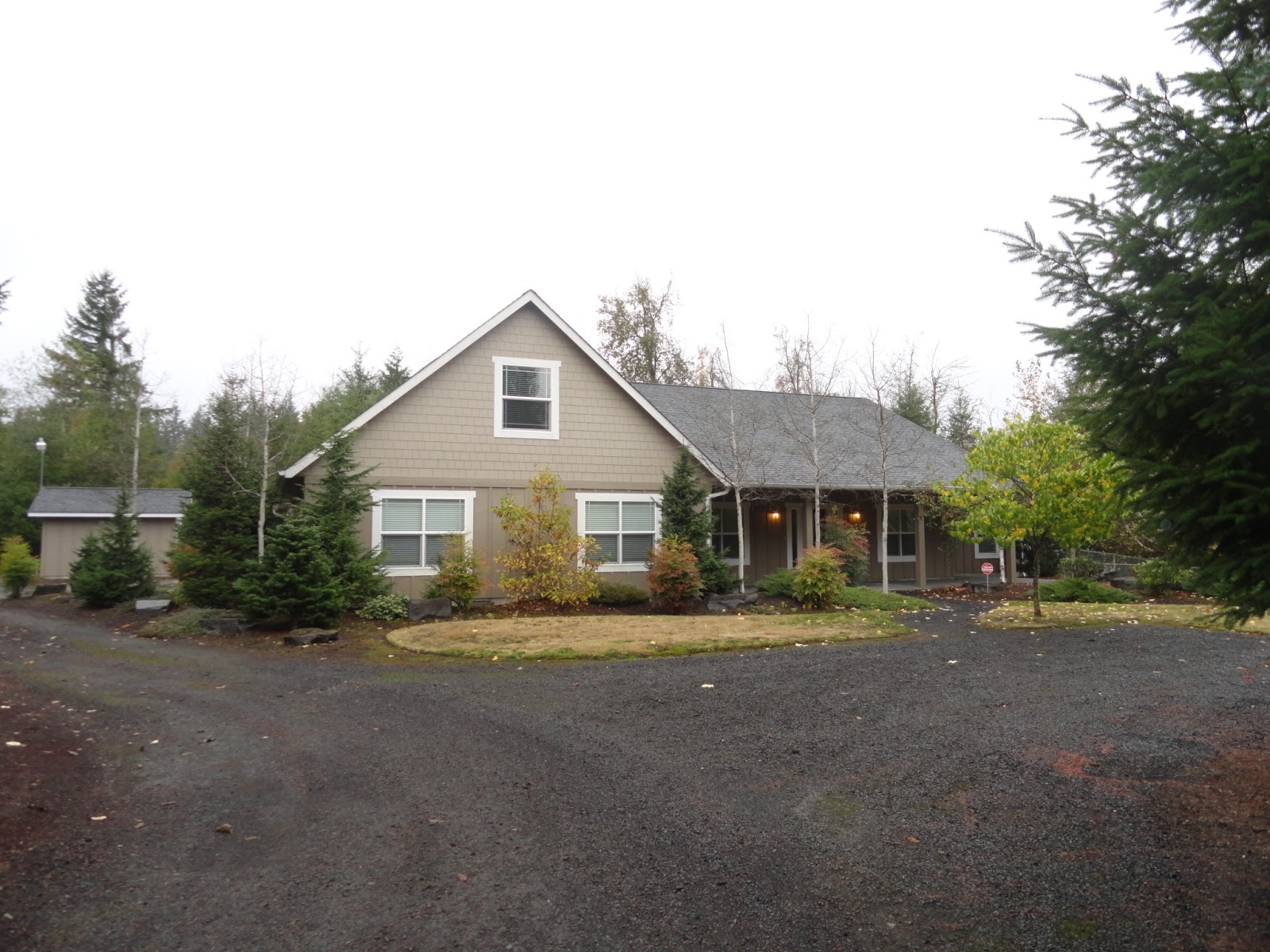
I listed this beautiful custom home in Olympia on 5 acres for $379,000.  On day 1, I secured a more than asking price offer and have a list of buyers eager to be notified if the current transaction fails.  This is a prime example: supply is low, demand is high.  Call me today for these results.

The MLS reported 4,289 closed sales during January, surpassing the year ago total by 820 transactions. Last month’s completed sales of single family homes and condominiums had a median selling price of $239,300. That’s up 11.3 percent from the year-ago figure of $214,990.

Supply has dwindled to less than two months in some counties close to job centers, spurring bidding wars. Some buyers are even resorting to writing “love letters” to win over sellers in these competitive situations. Brokers also report an increasing number of buyers have little or no interest in making offers on short sales.

As a Broker, the ratio between active buyers and available inventory is so out of balance, even homes that were hard to sell for various reasons are being snapped up so those sellers were wise to list.   So what does this mean exactly?  Now is a good time for sellers to list. Sellers who are considering a spring or summer listing may want to consider listing now as demand is outweighing supply.  This has given well priced sellers the advantage with the benefit of quick sales and multiple offers.

With multiple offers on the rise, buyers are seeking an edge as they vie for a desirable home. Brokers are reporting an increase in the use of heartfelt letters from would-be owners who want to distinguish themselves and forge an emotional bond with the sellers.  Buyers should not forget the human element of appealing to a seller in this multiple offer market.  You just never know who is on the other side of a transaction and what might be important to them.

Brokers in the 21 counties served by Northwest MLS added 7,096 new listings to inventory during January. That total was just slightly more than the number of pending sales (7,016) that members reported last month and brought the total number of active listings at month end to 18,008.

Often we don’t see momentum to really begin building until mid February to the first part of March. This year, I think due to the already low inventory and the continued low interest rates, the market feels like it started mid January.

Despite imbalance between supply and demand, more and more buyers are opting not to purchase short sale homes because of the uncertainty involved. It’s not uncommon for a lender to choose at the last minute to foreclose on a property instead of approving a short sale. When this happens it leaves the buyer high and dry with 2-to-4 months of time invested, only to have to start the process all over again.  That can leave them at a disadvantage considering the current pace of sales.

Sixty percent of homes close to job centers are selling within the first 30 days of being listed – twice the average rate, according to figures compiled by MLS, therefore extremely favorable market conditions have brought a surge of local home buyers into the market. Historically low interest rates and a shortage of inventory are creating an environment for multiple offer situations.

Even though buyers are flocking to newly listed homes, sellers must be smart about pricing. In my area, a home that comes on the market that is well priced for the area, style and condition is usually under contract within a few days.  Additionally, homes that have been on the market for more than 20 days are sometimes subject to price reductions. Today’s market defies basic economics for supply and demand.  Interesting factors include sellers who are still holding back for myriad reasons. Some do not have the confidence or equity to put their home in front of buyers, and that is creating even more pent-up demand.

Yet another positive indicator of the state’s housing market recovery came from the National Association of Home Builders and its NAHB/First American Improving Markets Index (IMI). Six markets in Washington appeared on the list, the largest number since that gauge was created in September 2011. The IMI is based on six consecutive months of improvement in housing permits, employment and house prices.

Northwest Multiple Listing Service, owned by its member real estate firms, is the largest full-service MLS in the Northwest. Its membership includes more than 21,000 real estate brokers. The organization, based in Kirkland, Wash., currently serves 21 counties in Washington state.

Tuesday, November 27, 2012

Prequalification vs. preapproval: What's the difference?

Seller's want to know you have the ability to obtain a loan before you enter their home and as agents, we want to ensure that the time we spend showing homes is with preapproved customers.  These two home mortgage terms often get used interchangeably, but in fact, they're very different.


  • Prequalification is an estimate of the loan amount a lender may be willing to lend based on the preliminary information provided.  A prequalification is really just a general figure to help the buyer get started shopping for a home.

  • Preapproval is more formal than a prequalification and means that a lender has tentatively committed to an amount for a buyer's loan.  It is based on a preliminary review of the buyer's credit information and provides the approximate mortgage loan amount and monthly payment for which the buyer qualifies.
As always, I can give you names of lenders who can help you with the process.  Just let me know.

Wednesday, May 16, 2012

Housing Cycle Reaches Low Point


This piece, by Lawrence Yun, Chief Economist of the National Association of REALTORS.  was recently published in the May/June 2012 REALTOR Magazine, is short and direct.  I'm hopeful you find it as useful as I did.

Home sales volume last year was up modestly over 2010, but there was an important shift in their composition: Investors were stepping up to buy while households dropped back. There’s a positive side to this. Our surveys show that households getting into the market are doing so for all the right reasons. They’re seeking a different home or another neighborhood. They’re not buying just so they can flip the house at the first sign of market change.

These buyers are getting in at the low point of the housing cycle, so meaningful wealth gains over the next few years are inevitable even though financial considerations are not their principal motivation. From 1981 to 2011, despite the housing bust years, home values more than tripled. For that reason, households who bought 30 years ago are sitting pretty financially. Renters’ typical net worth, by contrast, barely changes, so renters today have about $4,000 in net worth, not much different than they had a few years ago. Compare that to home owners, whose net worth is typically around $160,000. That’s down from $230,000 at the height of the housing bubble, but it remains in stark contrast to renters.

Looking ahead, we could see a greater unequal distribution of net worth over time as home prices rise. Those who will benefit the most are those who, like many investors and some households, are buying during this low point.  Unfortunately, many would-be buyers are either hampered by today’s excessively tight credit requirements or earning too little to qualify. On the first problem, we will continue to urge lenders to return to reasonable, pre-bubble standards. On the second, those who lack the income to buy face challenges that go beyond our ability to help. At a minimum, we can encourage young people to stay in school, since high school dropouts are far more likely to struggle economically throughout their lives than graduates.